Twenty jobs. Each one runs start to finish.
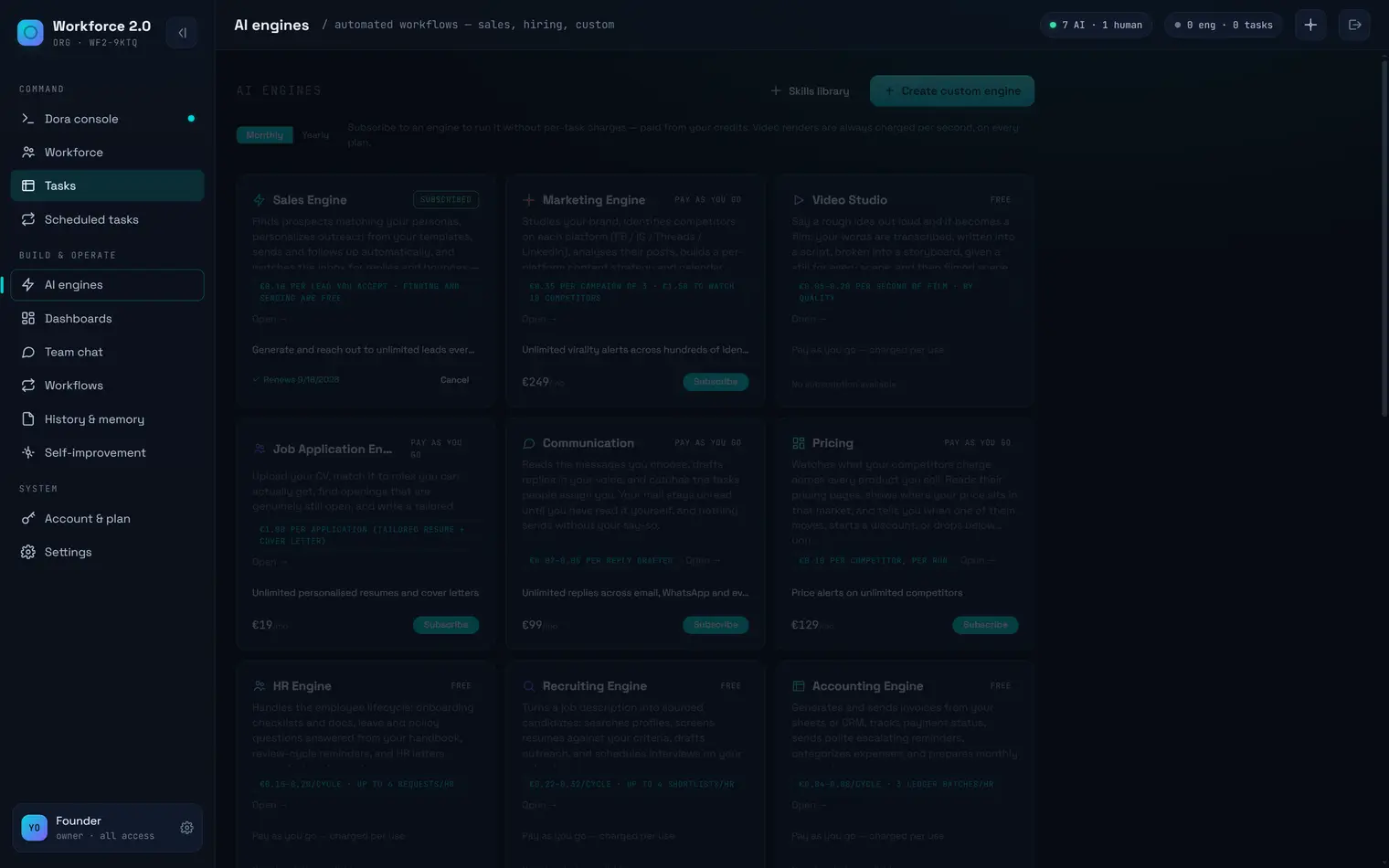
We call each one an engine. An engine is one job the software runs the whole way through, from the research at the front to the follow-up at the end, checking with you at the points that matter.
The six people install it for
The main six
These have the most work behind them: real browsers doing real checks, their own screens in the app, and their own approval steps.
Sales
Finds companies that match the customers you already have, checks the contact details are real, writes the outreach, and chases the follow-ups. It learns your writing from what you actually send.
Finding is free · €0.10 per lead you keep How it finds them →Marketing
Studies your brand, works out who your competitors are on each platform, reads what is working for them, then builds a plan, a calendar and the posts. Reports back on which channel actually brought leads.
€0.35 per campaign of 3 The whole pipeline →Inbox and replies
Reads the mailboxes you choose, drafts replies that sound like you, and pulls out the things people have quietly assigned you. Your mail stays unread until you read it.
€0.02–0.05 per reply drafted The two promises →Competitor prices
Reads your rivals' pricing pages with no AI involved in the reading, shows where you sit, and tells you when one of them moves, starts a discount, or drops below you.
€0.10 per competitor, per check Why it refuses to guess →Video studio
Say a rough idea out loud. It writes the script, a second pass directs it into scenes, then it draws a still for each one and films them. There is a timeline editor for the cut.
€0.05–0.20 per second of film Script first, then shots →Job applications
Matches your CV to roles you can realistically get, opens every posting to check it is genuinely still open, and writes a CV and cover letter for each one.
€1.00 per application The ten checks →And fourteen more
The rest of the back office
These run on the same engine system and the same approval rules. They are lighter than the main six, and they are the ones that quietly remove a morning a week.
HR
Handles the requests that land on whoever is doing HR that week.
€0.15–0.20 per cycle · up to 6 requests an hourRecruiting
Screens applicants against what the role actually needs and builds a shortlist.
€0.22–0.32 per cycle · up to 4 shortlists an hourBookkeeping
Pulls invoices, posts them, and reconciles the ledger in batches.
€0.04–0.08 per cycle · 3 batches an hourLegal
Drafts and reviews routine documents against your own precedents.
€0.27–0.38 per documentCustomer support
Answers tickets from what your documentation and past replies already say.
€0.05–0.08 per ticketOperations
Watches the things that should have happened and reports what did not.
€0.15–0.19 per cycle · hourly reportProcurement
Turns a request into quotes, a comparison, and something you can sign off.
€0.21–0.30 per requestCompliance
Watches the rules that apply to you and flags what changed.
€0.40–0.47 per cycle · 4 checks a dayResearch
Turns a question into a brief with the sources attached.
€0.19–0.26 per briefGrants
Screens grants you could actually win and drafts the application.
€0.39–0.49 per cycle · 6 screened a dayInvestor relations
Keeps the update written and the numbers current between rounds.
€0.20–0.31 per cycleStartup
Produces the deliverables an early company keeps needing and never has time for.
€0.27–0.36 per deliverableStock analysis
Builds a report on a listed company from filings and market data.
€0.27–0.36 per reportMarketing (light)
A shorter four-step version for when you want copy rather than the whole campaign machine.
included in the engine catalogThese are estimates rather than fixed prices. Engines charge a flat fee per finished task, and the per-cycle figures come from counting the tasks a typical run needs. Actuals depend on content size and how much you approve.
For engineering teams
Four more, if you write software
These are aimed at developers rather than at running a business, and they are not priced per cycle. They ship with the app.
Code review
Reviews a change for correctness and for the things a tired reviewer misses.
Design refresh
Audits an interface and proposes the specific fixes rather than a redesign.
Investigate & fix
Takes a bug report, traces it to the cause, and proposes the change.
Bloat audit
Finds the code that can be deleted, and says what replaces it.
How is this different from asking ChatGPT?
A chat assistant answers the question you asked, then forgets you. An engine runs a sequence of steps over hours or days, uses real tools like a browser and your email, remembers your business between runs, and stops to ask before anything is sent. You get a finished job rather than a draft you still have to act on.
Can I build my own?
Yes. Type a name and the steps in ordinary words, and it compiles them into a working sequence of two to six steps, picking who does what and which apps they need. Any step that sends something outside the company is forced to ask you first, unless you explicitly say otherwise.